Report Table of Contents:
1. Introduction & Survey Highlights
3. IT Initiatives & Trends (current page)
Top Concerns
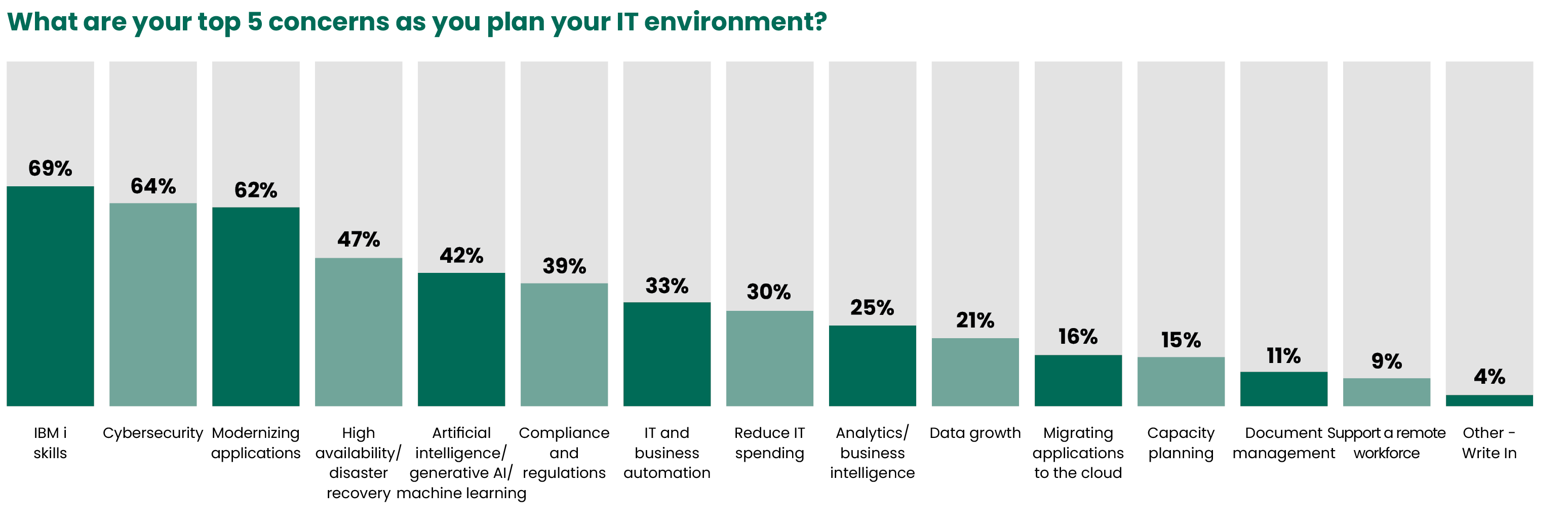
For the first time since 2017, cybersecurity is not the number one concern among IBM i professionals. In 2026, the top spot belongs to IBM i skills, which has been steadily climbing the rankings over the past few years. IT staffing shortages are affecting departments worldwide, including IBM i organizations.
This growing concern regarding IBM i skills is exactly why IBM is investing in AI projects like Bob, a new unified code assistant set to hit the market in 2026. This way, teams that are short on staff or expertise can still move forward with projects like modernizing business applications or upgrading Java and older RPG code into newer interfaces.
If your team is looking to maximize current expertise, we encourage you to read our guides on what to do when your AS/400 talent retires and what to consider before moving to the cloud.
Cybersecurity is still a major concern for IBM i professionals, garnering responses from 64% of respondents. These results indicate that IT leadership remains aware of the devastating ramifications of suffering a cyberattack and are looking to bolster their security posture – skills and budget permitting.
This year’s other top concerns are modernizing applications, HA/DR, and AI and machine learning. AI and machine learning was the biggest mover within this group, jumping from 30% in 2025 to 42% in 2026. Organizations everywhere are looking for opportunities to leverage AI in day-to-day operations – an interest made even stronger by the widening IBM i skills gap.
RECOMMENDATION:
With IBM i skills taking the top spot in 2026, it’s more important than ever that organizations maximize their IBM i talent through mentoring and education. There are plenty of free resources and tools that teams can leverage in their efforts to do so. COMMON is an excellent place to start while Fortra’s free library of resources offer plenty of helpful pieces of content. As always, the very end of this report contains links to tools, tips, and solutions to help you plan new IBM i projects.
Cybersecurity
Cybersecurity is still a top priority for most businesses today. We’ve seen enough organizations brought to their knees by data breaches, ransomware, and security vulnerabilities to realize that failing to prioritize cybersecurity is often at the root. Even though businesses that prioritize security appear to be deploying many solutions, organizations often lean too heavily on built-in security features.
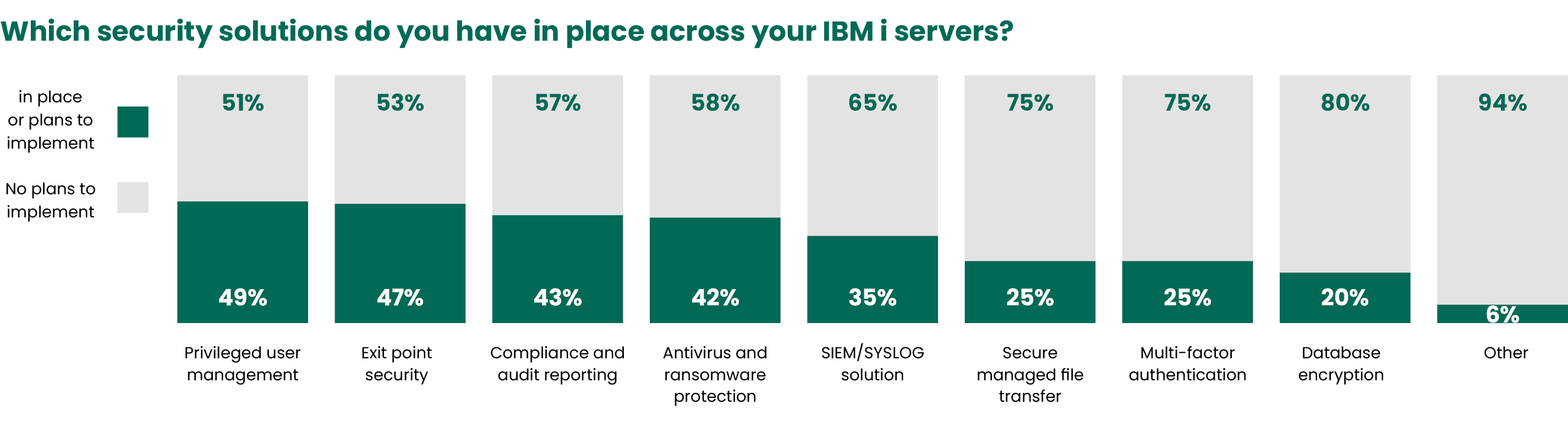
It is surprising to see that only 42% of respondents have antivirus and ransomware protection. IBM i carries a reputation of being one of the most secure platforms on the market, but threats are increasingly advanced and more prone to target higher value victims like IBM i customers. Additionally, IBM i has never been more interconnected – and therefore exposed if proper security measures are not in place. Employing solutions that continuously scan your IBM i for malware is a necessity today.
Of the nine solution categories listed, usage dropped among five of them. However, these decreases were marginal and are likely due to IBM i shops receiving corresponding services in a hosted environment. One of the larger drops was in multifactor authentication (MFA). The release of IBM i 7.6 came with the addition of MFA for those on Power10 or above. While enhanced security on the platform is positive, it is important to understand what use cases this feature applies to.
To cover the financial risks of a cyberattack, many are seeking cybersecurity insurance. Gaining coverage can be difficult, and often requires organizations to have a variety of security measures such as MFA already in place. Even more are integrating IBM i with enterprise solutions via SIEM integration to help combat ransomware with improved visibility over critical IBM i messages and events. At Fortra, we are unique in our ability to combine SIEM with XDR/MDR and treat IBM i as another end point in your infrastructure.
The adoption of antivirus and exit point technology should be prioritized. The old adage that IBM i is behind a firewall is still true, but we have seen many CVEs around firewall appliances and poorly configured equipment result in devastating attacks. Fortra’s Powertech Exit Point Manager and Powertech Antivirus for IBM i provide you with an important layer of defense against intrusion attempts.
RECOMMENDATION:
If your organization is one that currently has no plans to implement certain cybersecurity solutions, it’s worth rethinking that approach. If you are unsure of how to start, our free IBM i Security Scan and a team of experts will point you in the right direction, and The State of IBM i Security Study provides even more insight into the tool and strategies organizations are using to secure IBM i.
Cybersecurity Challenges
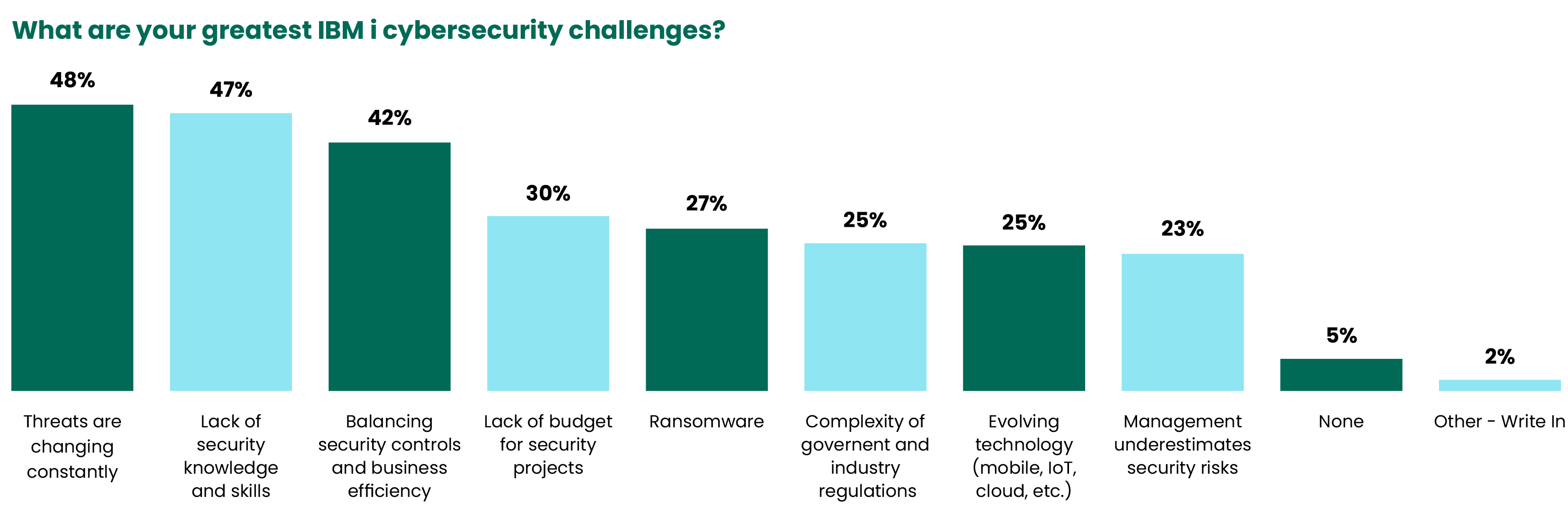
Of all the IBM i security challenges organizations face, the fact that threats are changing constantly topped the list this year. Very close behind was a lack of security knowledge and skills, followed by balancing security controls and business efficiency. These have been the top three security concerns for the last four years and reflect the current state of cybersecurity across all industries and boardrooms.
Of all the answer choices, lack of budget for security projects showed the most movement, increasing from 23% to 30%. This could be another factor contributing to the decrease in adoption among five of the nine security solution categories.
It is not uncommon for projects other than IBM i security to be prioritized when finalizing IT budgets, however, we implore IT leadership to consider the business impact of IBM i downtime when making these decisions. Just like any other platform, malware can bring IBM i to a halt, making it a wise decision to invest in security.
Adaptation is the overarching goal in the face of cybersecurity threats. The everevolving nature of threats requires ongoing vigilance on the part of businesses.
RECOMMENDATION:
In a year that continues to serve up fresh cybersecurity challenges, choosing a cybersecurity partner who understands how to manage constantly evolving threats becomes even more important. SecureCare for IBM i from Fortra is a great option to fill in skills gaps on IBM i or your entire enterprise. Our services team has also had great success assisting customers looking to implement SSO on IBM i, which is an excellent way to mitigate the costs and risks associated with manual password management. Ransomware is still a threat, so make sure you’re building a strategy to prevent and detect attacks.
Regulations
IT and industry have shifted over the past several years toward implementing long-overdue improvements in data privacy, and this movement has also gained substantial traction at the national and state levels. Growth in both the number of regulations and the severity of punishments for breaking them indicate that compliance mandates are here to stay.
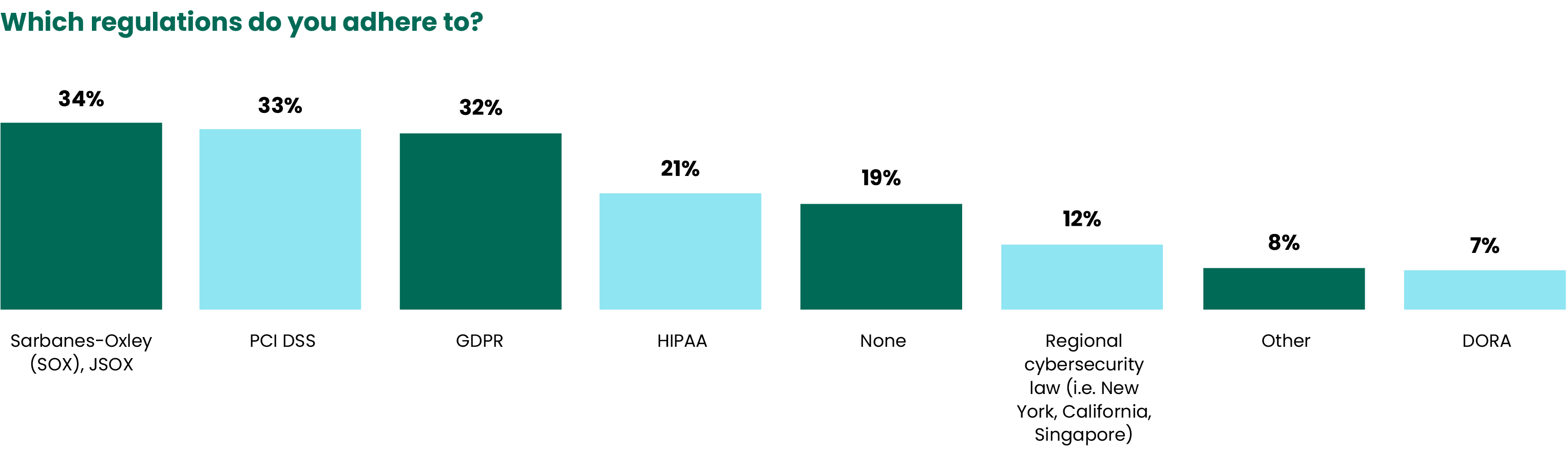
81% of respondents reported that they are adhering to at least one regulation, namely GDPR, PCI DSS, Sarbanes-Oxley, and HIPAA.
19% of our respondents still do not adhere to any compliance mandates. This is likely because many of these organizations are privately owned, including many manufacturers and transportation companies. Although they do not abide by any regulations, private organizations are still highly concerned about security, as they are generally less likely to recover from the consequences of a ransomware attack.
If you are a privately owned business that does not need to comply with certain regulations, it is worth looking to widely-adopted frameworks such as the CIS Benchmarks for guidance in crafting your security strategy. Many of the guidelines set forth by these frameworks offer security best practices that, if adopted and maintained, can help you create sustained security success for your organization.
Also, many businesses are now bound by state regulations, such as those in California and New York. As more countries pass national or regional regulations – such as Europe’s DORA for large financial institutions – the number of organizations required to adhere to these laws will grow in the years to come. The International Association of Privacy Professionals estimates that 70% of nations worldwide are covered by some form of national data privacy law, and new laws and regulations are enacted every year, especially in the EU (such as DORA and Data Governance Act). It is essential to be vigilant of the changes and adapt data governance policies accordingly.
Recommendation: REGULATIONS
RECOMMENDATION:
Compliance is incredibly important, but some organizations struggle to find the resources to manage requirements efficiently. This compliance monitoring and reporting software for IBM i simplifies compliance report generation and allows you to quickly and easily provide auditors with the information they need. Automating audit processes is becoming a necessity for many organizations, as they cannot afford to continue using manual and time-consuming methods. You can save your staff time by offloading compliance processes with Fortra’s SecureCare for IBM i.
Development Languages
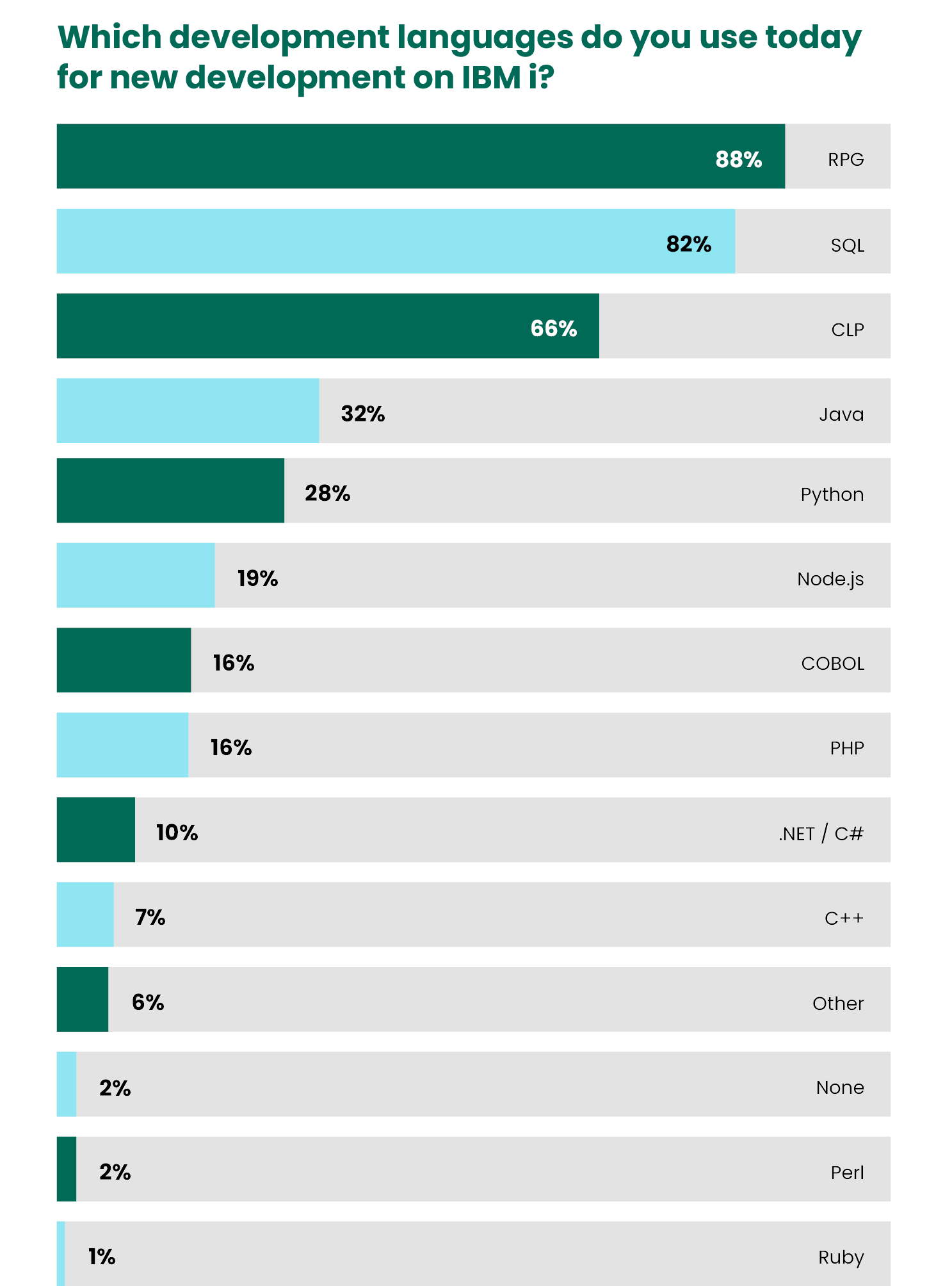
This year, the development languages used for new development on IBM i show interesting trends. The usual leaders—RPG and SQL— remain at the top despite both declining slightly year-over-year. People have worried that RPG would fade away, but IBM’s modernization of the language and its integration with DB2 have helped it become a viable language for the future. It has the ability to call services and integrate open source, SQL, and other modern techniques. Organizations are using modern, modular, free-format RPG for new development, and they are pairing this with other languages, which is evident in the number of languages that have significant usage.
One interesting change is that Java – having remained at or above 40% for the last decade – fell to 32%. In fact, usage fell – albeit, only slightly – for almost every single language listed. It is possible that respondents are not listing languages in which they are receiving assistance from AI development technology. Or, programming functions specific to certain languages could be getting outsourced. In either case, these results are fairly consistent with year over year trends and suggest a healthy set of workable languages available to IBM i developers.
Another interesting trend is that Python usage continues to climb. Python is the preferred language for performing AI development. Considering the increased demand for AI and services, this indicates that the right languages are being used for the appropriate use cases, and therefore IBM’s strategy is being supported.
We are seeing more people writing in a combination of languages, especially because modern RPG looks and acts like other languages, which also makes it easier to teach. This is promising for the future of IBM i and can help to close the IBM i skills gap.
Recommendation: DEVELOPMENT LANGUAGES
RECOMMENDATION:
As technology and development landscapes continue to evolve over time, it’s increasingly important for organizations to stay on top of current trends. If you’re looking for educational resources, organizations like COMMON, Fresche Solutions, Perforce, Profound Logic, and Lansa often offer webinars or other types of training that may be beneficial. Developers should also keep an eye out for AI technology, like Bob from IBM, that will help increase their productivity.
Open Source Development Tools
Open source, much like the rest of the IT world, is always developing. IBM puts substantial effort into increasing the availability of open source alternatives, and it shows in the growing number of open source tools being implemented on IBM i.
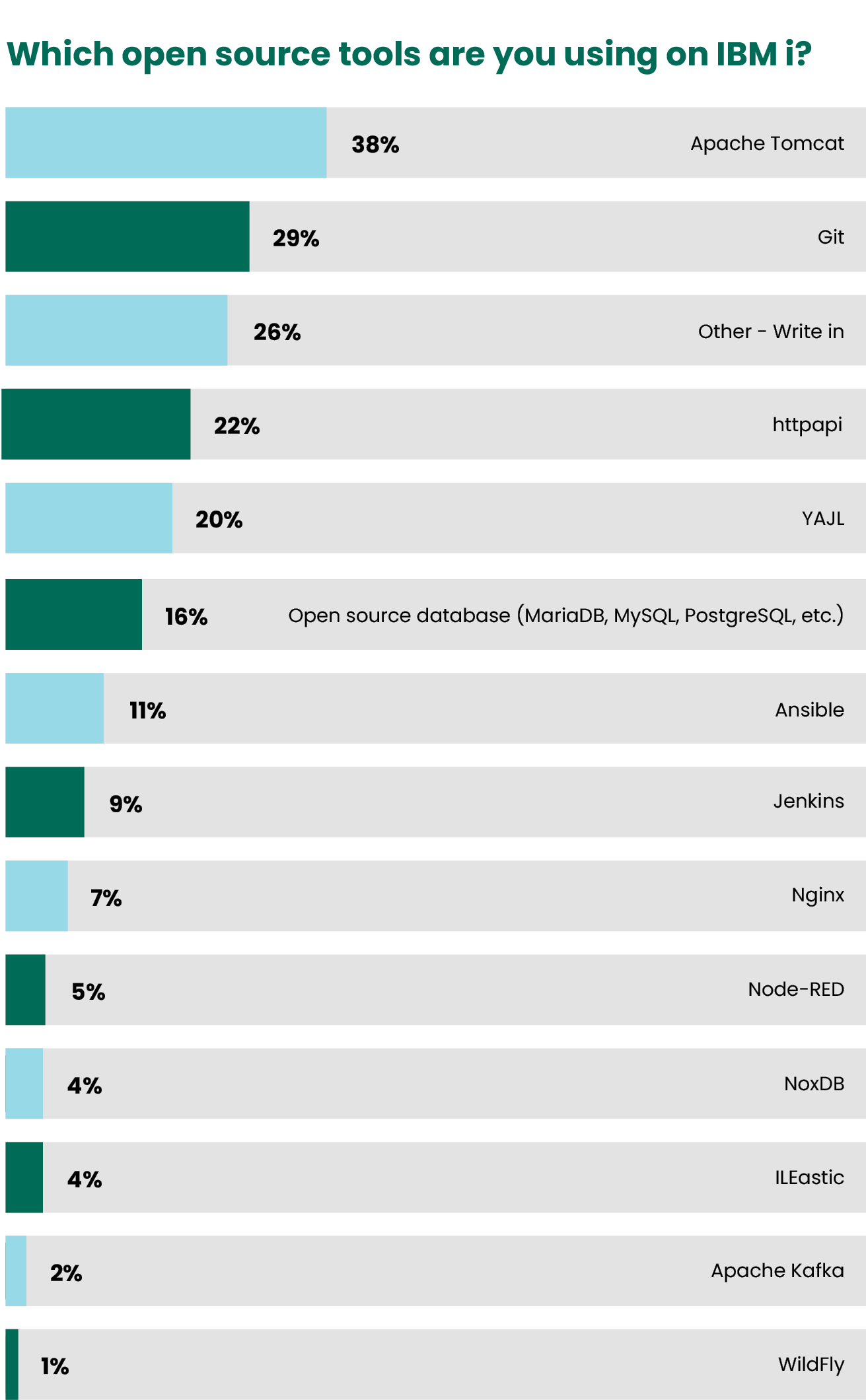
The most significant change is that Apache Tomcat jumped from 26% to 38%. This corresponds with last year’s emphasis on modernization, as Apache Tomcat is one of the open source tools of choice for IBM i shops looking to manage modernized applications and the accompanying languages.
Jenkins and Ansible continue to appear in the table, and together with the use of Git and Bash, is a strong indication that businesses are putting DevOps approaches to use in IBM i workloads. This is part of the modernization conversation and helps explain why application modernization is near the top of the list of IT concerns.
RECOMMENDATION:
With open source development almost certain to increase over the coming years, it is wise to ensure your development teams are ready for this. Visit IBM’s website for information about support for open source on IBM i.
Application Development Tools
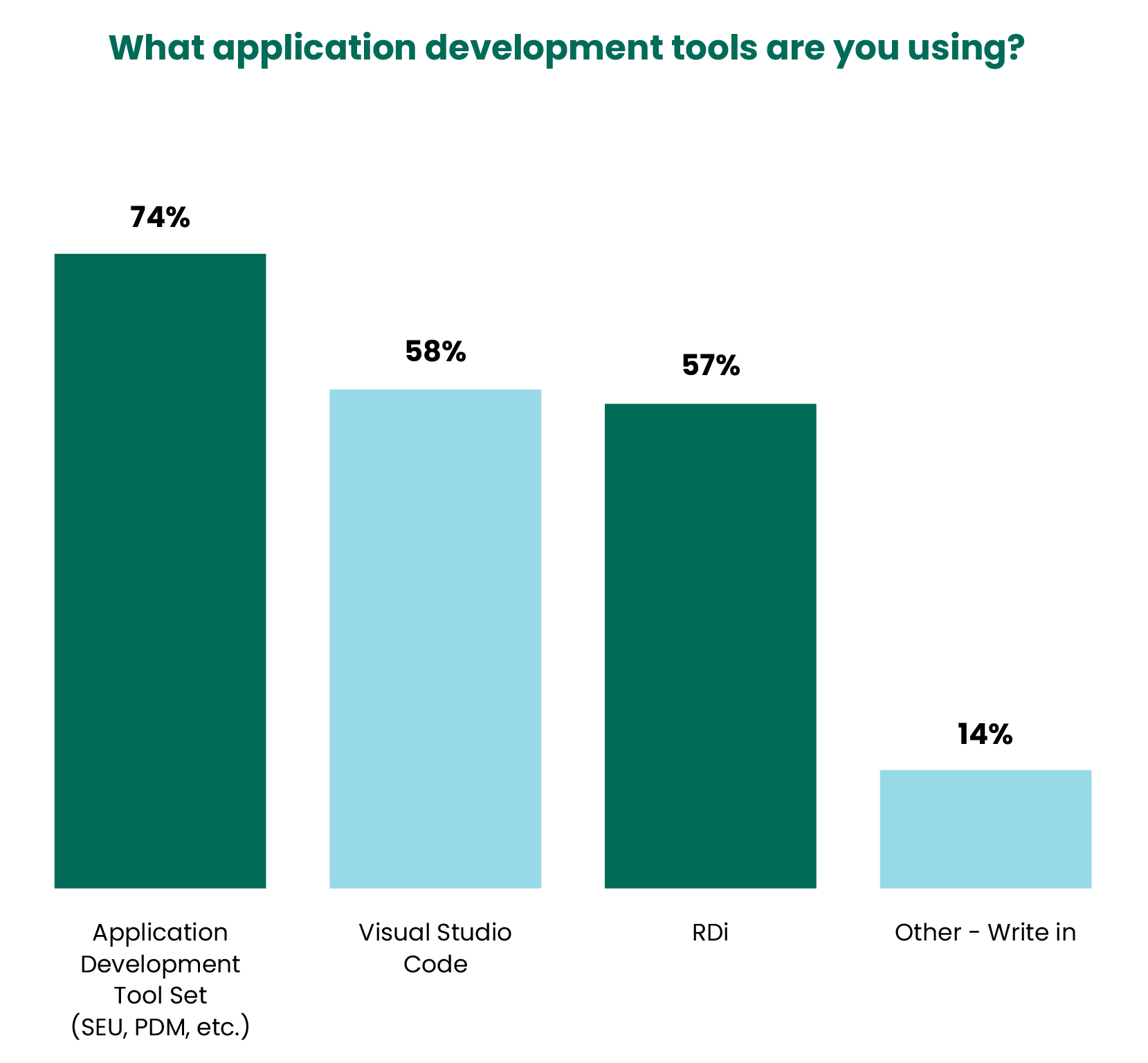
This year’s responses show a balanced use of older tools from the Application Development Tool Set and more modern tools like Rational Developer for i (RDi) and Visual Studio Code. The Application Development Tool Set (composed of SEU, PDM, and more) came in first at 74% followed by RDi at 57%, and Visual Studio Code at 58%. Visual Studio Code usage continues to grow at a rapid pace and has finally surpassed RDi, and could eventually surpass the Application Development Tool Set in the coming years.
It is not surprising that such a large percentage of respondents use the Application Development Tool Set, since the more experienced developers are familiar with these tools. However, the adoption of cutting-edge practices is essential for attracting and retaining talented software developers, and the wide use of more modern tools like RDi and Visual Studio Code points toward a bright future for young developers working on this platform. Overall, the results indicate that IBM i developers are using a range of tools for different development activities – and their choice of tool often depends on what they are most familiar with.
RECOMMENDATION:
RDi is technology rich with potential for any IBM i shop. If it’s a question of not being quite sure how best to deploy it, these six RDi tutorials contain a wealth of suggestions and tips to maximize the value from RDi. There are also plenty of instructional Visual Studio Code videos on YouTube and from COMMON to help you get started.
Automation
When asked, “Does your IBM i run fully unattended after working hours?”, 73% of respondents said yes. This is a trend that has fluctuated from year to year but has shown an overall consistent growth pattern since 2015. For the fourth consecutive year, less than a third of respondents said they attend to IBM i operations outside of normal business hours.
33% of respondents listed IT and business automation as a top concern for 2026, signaling a significant interest in RPA. With RPA and IBM i automation, you can “set it and forget it,” while still readily adjusting as your organization evolves thanks to the rule-based technology that underpins both. This could provide a major benefit to those IBM i shops that are most affected by the IBM i skills gap.
To help clients that run many instances of IBM i, IBM has been developing deployment and configuration automation tools. Ansible and Bash are two items used in helping with deployment and system configurations.
RECOMMENDATION:
Automation can be incredibly useful for any IT department, saving time, money, and resources. If you are unsure whether more automation is suitable for your organization, a Fortra guided automation assessment can help with the decision-making. If you’re working towards going paperless, check out our document management solutions that automate key business processes by electronically capturing, managing, and distributing documents and forms on-premises or in the cloud.
High Availability
47% of our respondents this year cite high availability/disaster recovery as a top concern when planning their IT environment, trending downwards from 63% in 2024. This decrease in concern is likely due to the fact that nearly all of the survey respondents have one or more systems in place to recover from a disaster. IBM i customers have a multitude of backup and recovery options to match their desired recover time objective (RTO) and recovery point objective (RPO).
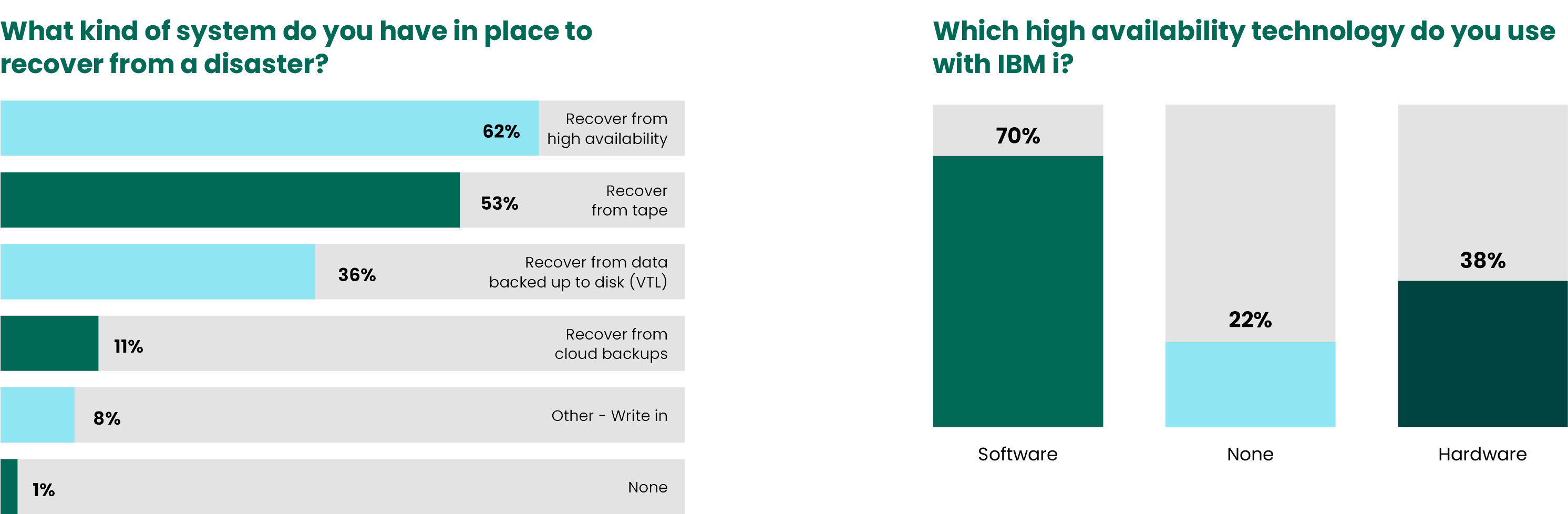
53% of organizations rely on recovering from tape and 62% have high availability. Customers today are also using storage point-in-time backups like FlashCopy from IBM. We expect to see a rise in the reliance on all different types of recovery in the future.
Software-based replication continues to be the clear favorite when it comes to the type of high-availability technology that organizations use, but hardware-based technology holds steady with 25% of respondents using IBM PowerHA and 8% using other forms of hardware-based replication.
When we talk about modernization, we tend to talk just about application modernization, but how you implement infrastructure to be more resilient is a type of modernization that is just as crucial.
It is still concerning that 22% of respondents have no HA/DR technology in place. These organizations are at serious risk of losing business critical data should an unexpected outage occur. The stability of the OS is not sufficient to protect customers from power outages and plugs – and many IBM i customers don’t realize this until it’s too late. Thankfully, the number of respondents that have no HA/DR solution continues to decrease year after year.
RECOMMENDATION:
Disaster recovery cannot be left to chance or ignored completely. Fortra has a range of business continuity solutions and services that can help you plan for (and recover from) outages. Our team can guide you through the various IBM i HA/DR tools such as PowerHA, Robot HA, and Db2 Mirror for i. We also offer Robot HA Care, a service for IBM i shops that may not have the time or expertise necessary to guarantee disaster recovery readiness.